The lecture is presented by ESA about YPSAT at ESTEC and will be open to all students with any background. You can also find more info about the mission here: ESA – About YPSat-2 and the page for the general YPSAT programme here: ESA – ESA Young Professionals Satellites
 Want to visit the lunch lecture about this topic? You can find more info and register here.
About the topic
What began as a routine medical scan aboard the ISS revealed the first case of a blood clot in an astronaut’s internal jugular vein, highlighting a real health concern for long duration missions. As cardiovascular diseases remain the leading cause of death on Earth, understanding these risks is essential for astronaut safety and advancing medical research.
The scientific payload of YPSat-2 harnesses the unique research environment of ESA’s Space Rider to study blood flow dynamics and the risk of blood clot formation in microgravity. The AIM payload (Angiology in Microgravity) focuses on changes in blood flow and vein behaviour linked to deep vein thrombosis and will demonstrate Particle Image Velocimetry (PIV) in space for the first time to visualise fluid motion with high precision.
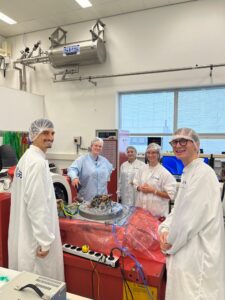
Developed across multiple ESA sites and disciplines, the team is wrapping up the Critical Design Review and is now entering the most demanding phase: turning design into reality. This lecture offers a behind-the-scenes look at how science becomes hardware, the challenges of making it work in space, and the key steps ahead before YPSat-2 can take flight.
About the project:
YPSat is an initiative that gives ESA Young Professionals hands-on experience across all phases of a real space mission. Entirely developed by YPs and supported by ESA Education Office, experts, industry, and academia, it fosters cross-disciplinary collaboration across ESA sites. Through active involvement in key subsystems, including Science, Optical, Flight software, Thermal and Structural, Electronics, Fluidics, Systems engineering and Product Assurance, the programme fosters the transfer of knowledge and skills to the next generation of space professionals.
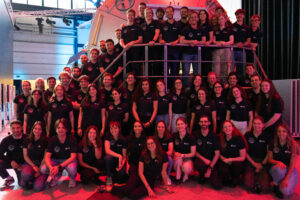
YPSat-2, the second mission of the programme, brings together around 60 Young Professionals alongside their regular duties. Building on the success of YPSat-1, which flew on the maiden flight of Ariane 6 in July 2024, YPSat-2 empowers the next generation of European space leaders to design, build, and deliver a mission ready for orbit.