
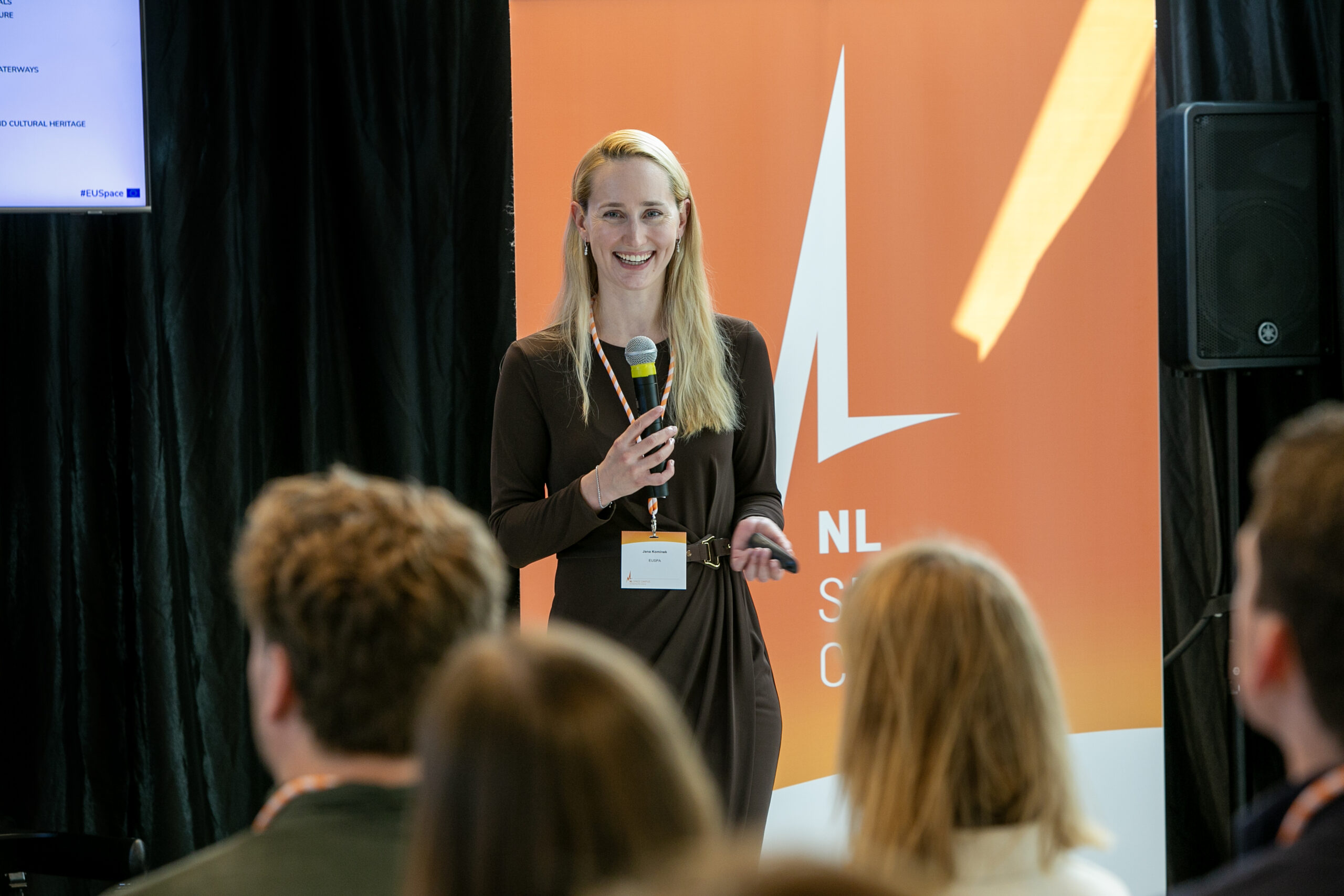
The European space startup landscape includes a range of programmes and support mechanisms at both the European Union and national levels. How do these connect in practice, and how can they work together rather than operate in parallel? On the sidelines of the Space Investor Event in Noordwijk, we spoke with Jana Kominek Vecerkova, CASSINI Space Entrepreneurship Officer at the European Union Agency for the Space Programme (EUSPA).
Understanding what exists, identifying what is missing
At EUSPA, Jana works on CASSINI, an European Commission’s initiative supporting space startups across the ecosystem, including ventures leveraging EU space programmes such as Galileo and Copernicus. This spans both upstream and downstream activities, engaging with startups, investors, and corporates, while also raising awareness in what remains a relatively niche industry.
“We come to events where we can share what we do and also learn from startups and investors what they are missing, where the gaps are, and whether there is something else that can be done,” she explains.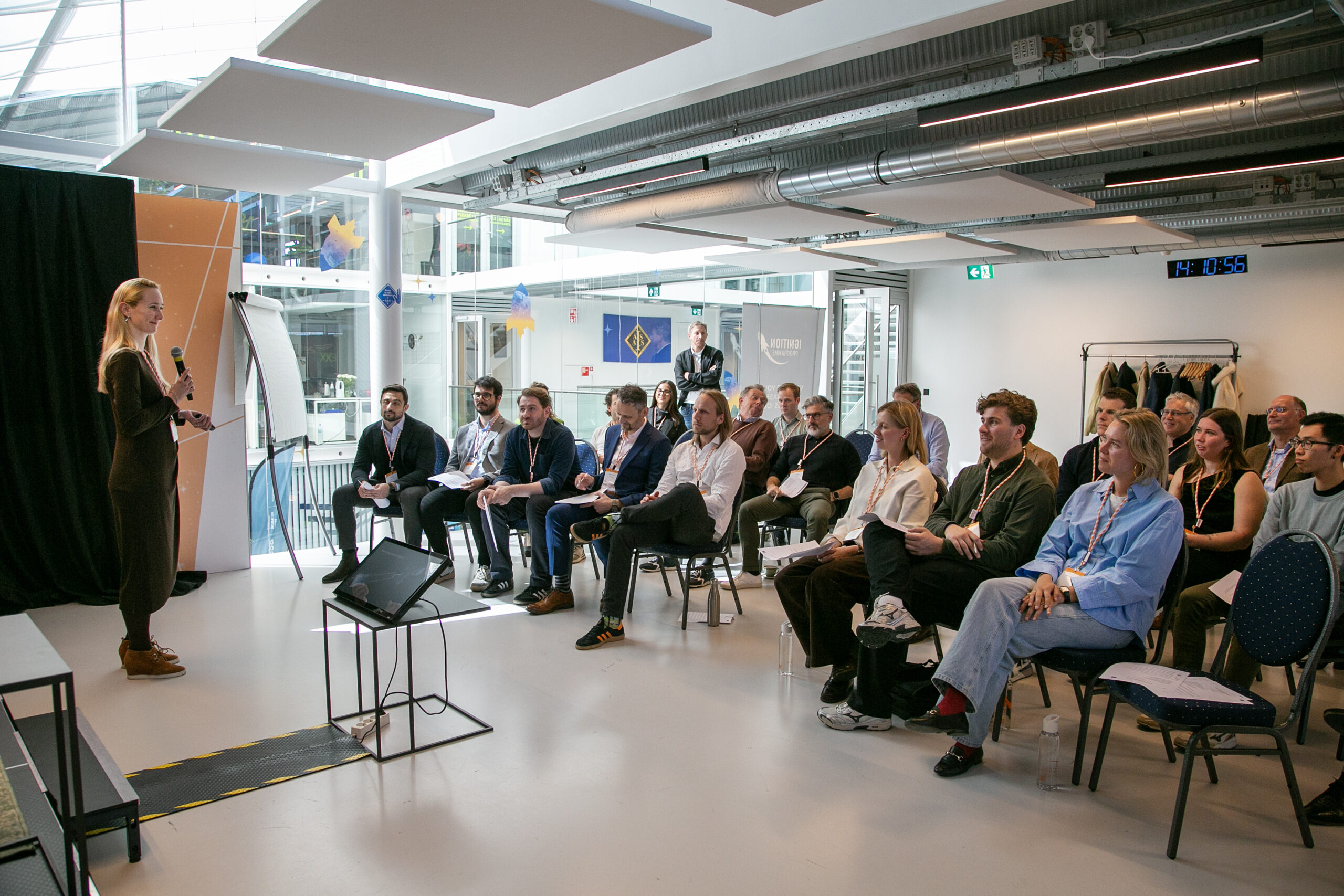
Part of this effort involves reaching investors beyond those already specialised in space. “There are investors who specialise in investing in space, but there are many more generalist funds. If we want to draw more investment into the sector, we cannot target only those who already know the area well.”
What startups should consider before meeting investors
Jana observes that many founders bring strong technical expertise. “Many of them are real experts, people who have worked in the industry for a while. Many of them have professors in the founding team.” At the same time, business development is sometimes treated as secondary. “Sometimes they put less emphasis on business development. It is a bit of an afterthought.”
She acknowledges the practical reasons behind this, but also how it is perceived by investors. “When you do not see a clear focus on selling, it can raise some red flags. That is something we have been noticing when people apply or when we introduce them to investors.”
Her suggestion is to address this earlier in the process. “Focusing on the business development side earlier on is something that can for sure be managed.” For those looking to strengthen these skills, she points to the EU Space Academy, which provides mentoring and offers online content on EU space topics as well as raising capital, building business and pitching.
For those unfamiliar with the initiative, Jana’s advice is straightforward. “In short, go to cassini.eu.”
The activities available depend on the stage of the company. Early-stage teams can take part in hackathons, challenges, and competitions. More advanced companies can apply to the CASSINI Business Accelerator, designed for companies that are already selling and looking to scale.
CASSINI also connects actors across the ecosystem. “We call it matchmaking. Many space startups are selling to very big companies, and there is always the chicken-and-egg problem. How do you get in the door unless you already have very good contacts?”
As a public institution, CASSINI does not invest directly. “We are not an investor. We are a public institution, so we can provide opportunities, mentoring, as well as funding” For example, the CASSINI Challenges competition provides €100,000 to startups at MVP stage.
Within the accelerator, the focus is on practical support. “The biggest value added is the in-kind support. You get mentors from your industry, from the niche where you are operating. They open doors, get you meetings, and help you with business development.”
Startups that are fundraising can also submit their pitch through a standardised form. If it meets the criteria, it is shared with CASSINI’s investor network and presented on a quarterly basis. Beyond this, CASSINI also works directly with investors through dedicated events and webinars, where they can exchange knowledge and sometimes collaborate on larger funding rounds such as Series A or Series B.
How European and national actors collaborate across the ecosystem
CASSINI engages with a range of actors across Europe, including accelerators, incubators, and national agencies. “We work with various networks that help us disseminate information, suggest things, and involve us when it makes sense. They try to involve us, and we try to involve them.”
This takes place in a European context shaped by diversity. ”The advantages and disadvantages of Europe are that it is a collection of various states and languages. In some countries, it is easier to get information across because they are more outward-looking. Others, maybe because of their size or language, are more inward-looking.”
Alongside ongoing activity, there are opportunities to strengthen coordination. “There are a lot of initiatives, a lot of dissemination happening, and any suggestion is always good.”
For organisations interested in engaging with EUSPA, there are structured entry points such as the CASSINI Entrepreneurship Days, EUSPA Industry Days and the User Consultation Platform. Direct contact is also possible. “If you write us an email, you will get a reply. It might not result in immediate action, but if it is something we can incorporate, we are always happy to talk.”
What makes European space startups competitive
On global competitiveness, Jana highlights structural factors. “Fragmentation and having initial big market traction will always be easier in bigger markets. That is just a fact.”
In practice, this means European startups often operate across multiple national markets, each with its own language, regulation, and business environment. Compared to more unified markets, gaining early traction and scaling can therefore be more complex.
She also reflects on the role of the ecosystem itself. “I think we put a lot of responsibility on the startups. But the ecosystem around them also has a role.”
That role is about continuity. “Sometimes you win something, get some attention, some visibility, maybe a small grant, and then it is not connected to another action. What helps is longer-term, systematic support – really a journey and not just an individual support action.”
This raises a broader question of alignment between levels. “You are supported by something at the European level, but is it then followed up with the support available in your respective country? Do these actors talk together?”
Sharing lessons between national and European actors, she suggests, is one of the areas where more can be done. Asked whether EUSPA is open to that exchange, her answer is clear: “Absolutely”
About the Space Investor Community in Noordwijk
The Space Investor Community, launched by NL Space Campus in collaboration with SBIC Noordwijk and KplusV, connects investors with startups in the Dutch space and high-tech sector through curated deal flow and dedicated events such as the Space Investor Event. Investors in the community gain access to selected companies, opportunities for co-investment, and exchange with other active players in the ecosystem. Investors can join the community by expressing interest via the NL Space Campus website, after which they are invited to connect and become part of the network. Read more